
▣
Organization-scoped data
Projects, measurements, photos, queues, and permissions are associated with a company workspace. Switching organizations does not mix project data.
MeasureTrace is designed around organization isolation, revocable sessions, local-first work, authenticated media access, and explicit offline authorization.
Projects, measurements, photos, queues, and permissions are associated with a company workspace. Switching organizations does not mix project data.
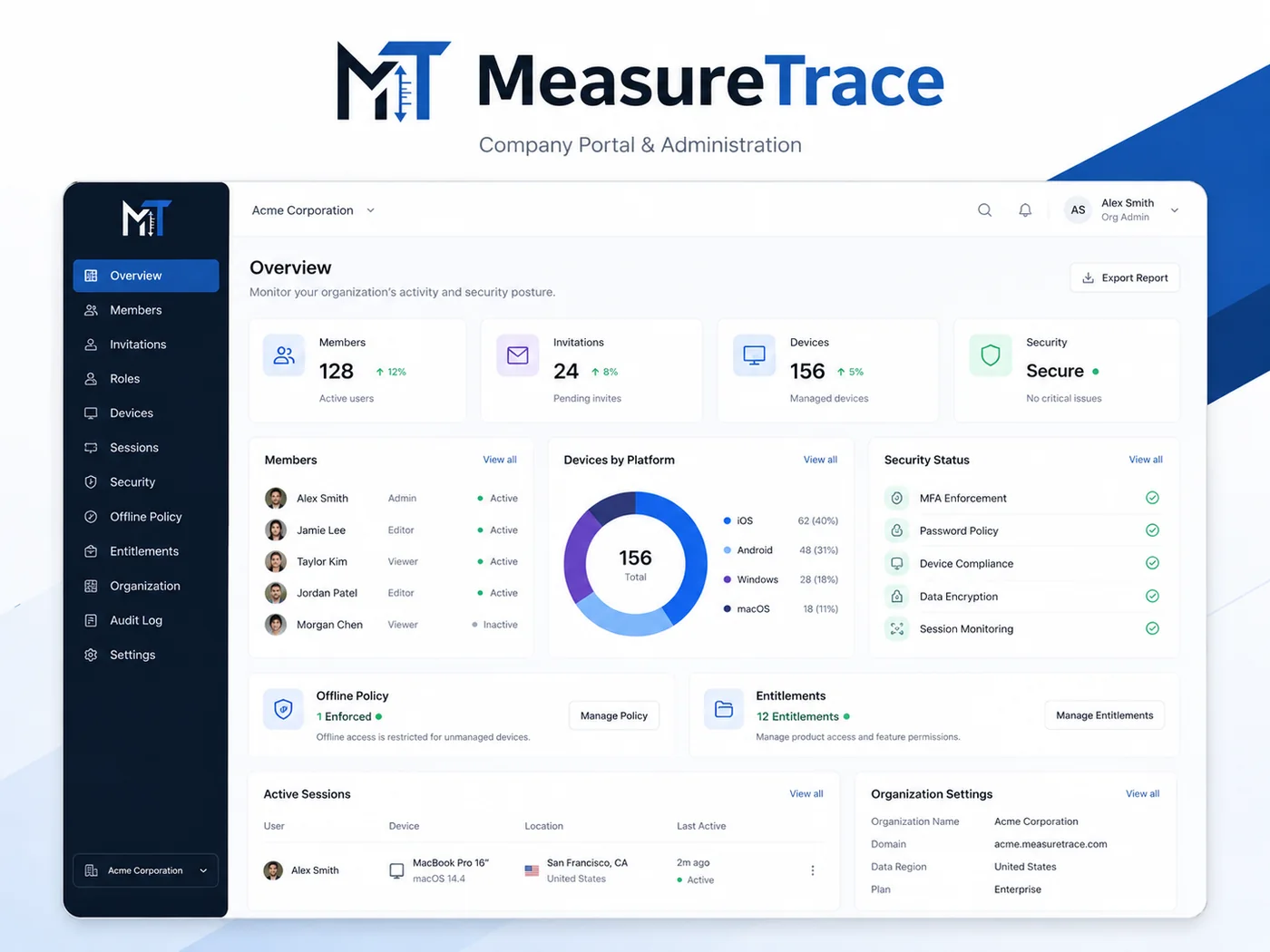
Users stay signed in through server-managed device sessions. A user or administrator can revoke one device, while membership suspension can end access across the organization.
Verified photos are stored outside the public web root and served through authenticated, organization-authorized endpoints rather than public file URLs.
Company workspaces can remain available offline for a limited authorization period. Expired or revoked access locks the workspace when authorization can no longer be renewed.
Photo uploads use resumable sessions with size, image-decoding, and SHA-256 verification before the server marks the media available.
Authentication, invitations, role changes, session revocation, and organization-access events can be recorded for company review.
The public launch requires production HTTPS, restricted database credentials, managed secrets, reliable email delivery, cleanup jobs, monitoring, backups, and external security review.